I designed a digital compendium of three learning activities to accompany Bloomwood Stories: Block Party, a health literacy game developed at the Center for Transformational Play in conjunction with the National Institutes of Health All of Us Initiative and Allegheny Health Network.
Capacity: Part-time work
Duration: 4 months
Role: Curriculum Designer
Collaborators: Morgan Evans (Research/Curriculum, Game/Experience Design, Narrative/Content, Production), Gal Fleissig (Development), Jessica Hammer (Advisor), Eleanor Hofstedt (Research/Curriculum), Geoff Kaufman (Advisor), Avonelle Wing (Game/Experience Design, Narrative/Content), Hanxiao Zhang (Art/UX Design, Production); 21 additional contributors
Tools: Canva, Figma
Methods: Backward design, think alouds, user-centered research
Recognition: Game won Best Student Game at Meaningful Play 2022, was a Gee Award Finalist, and has been exhibited at the Harlem Museum of Science
The Context
Bloomwood Stories: Block Party is a five-story interactive narrative game where players act as a community organizer, helping different characters through four quests in each story. I was brought onto the team to develop the curriculum activities that would accompany the game’s deployment in libraries. My audience for the design wasn’t players directly. Instead, it was the library staff who would facilitate the activities.
Dispositional Learning Goals
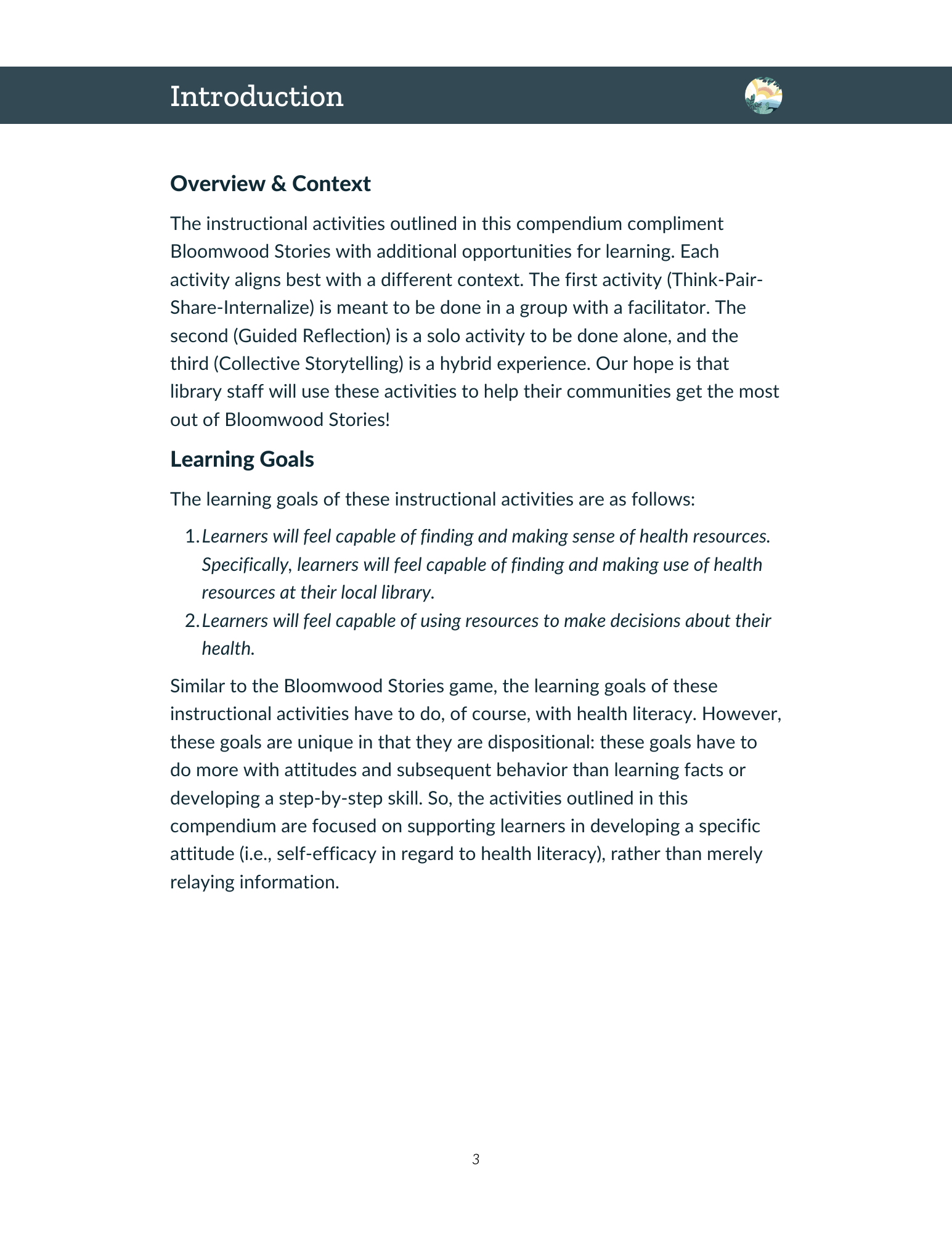
Dispositional learning goals are an interesting design challenge: there are no facts or skills to teach. With dispositional goals, the aim is for learners to see themselves or the world in a certain way. In this case, we wanted learners to feel capable of finding and making sense of health resources, and to feel capable of using those resources to make decisions about their own health. Designing for dispositional change requires different scaffolding than typical content-focused activities. I also had to design around real variation in the deployment context. Different libraries have different capacities and physical resources, so I needed a set of activities that was flexible enough to work across different configurations.
I developed three complementary activities:
Think-Pair-Share-Internalize (designed for group facilitation)
Guided Reflection (a solo activity)
Collective Storytelling (a hybrid experience)
These activities, and accompanying learning goals, are outlined below in the compendium introduction.
Designing for Library Staff
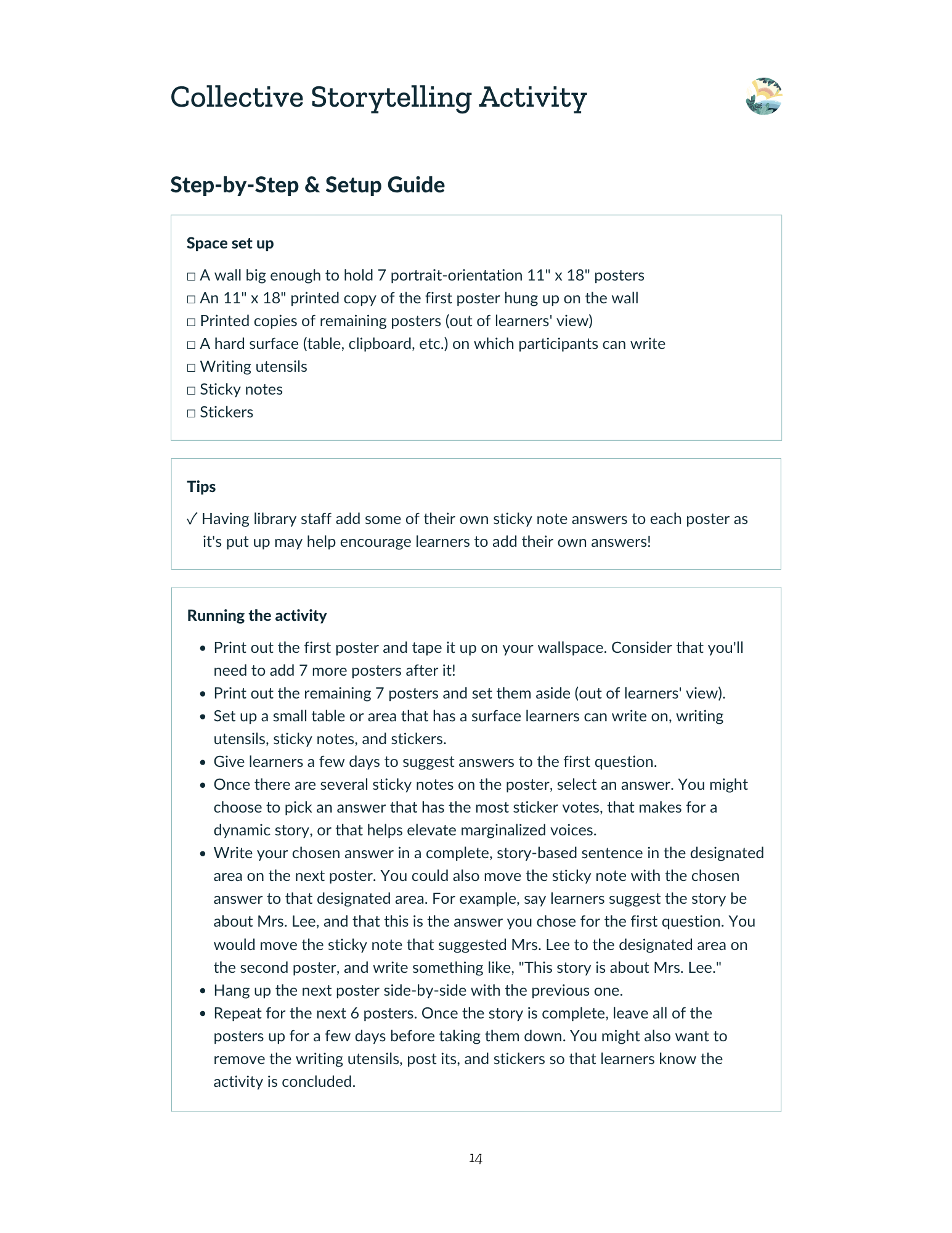
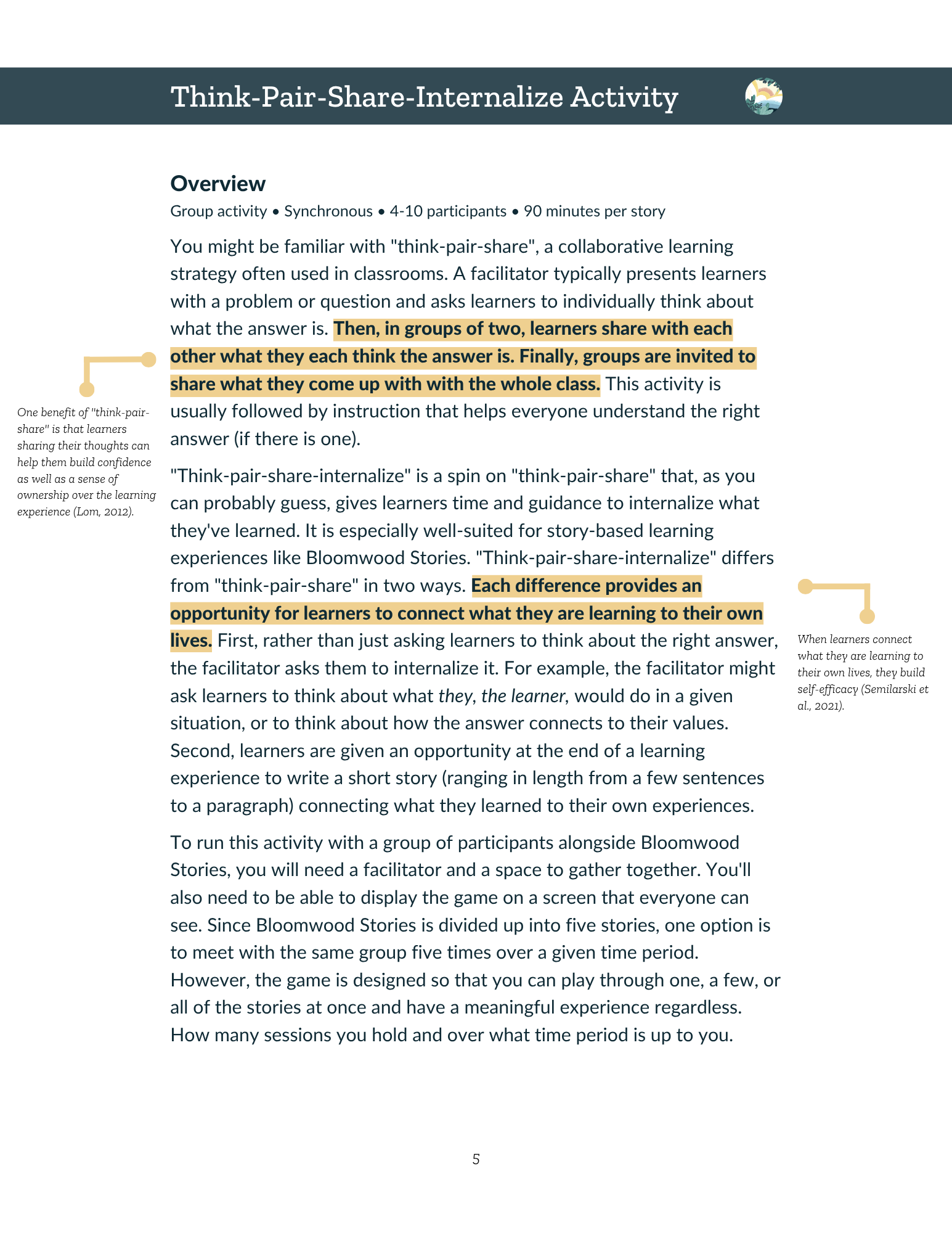
Without successful facilitation from library staff, the instructional impact wouldn’t reach players. So, I packaged all printed and instructional materials into a single PDF, with resolution high enough to print large poster materials directly from the document. Each activity included step-by-step facilitation instructions (as shown below). I also added research callouts (short notes citing studies that supported why I designed each activity the way I did) throughout the compendium, as also shown below. The goal was to equip library staff not just with instructions, but the reasoning behind them, so they could adapt thoughtfully if their context required it.
Validating the Design
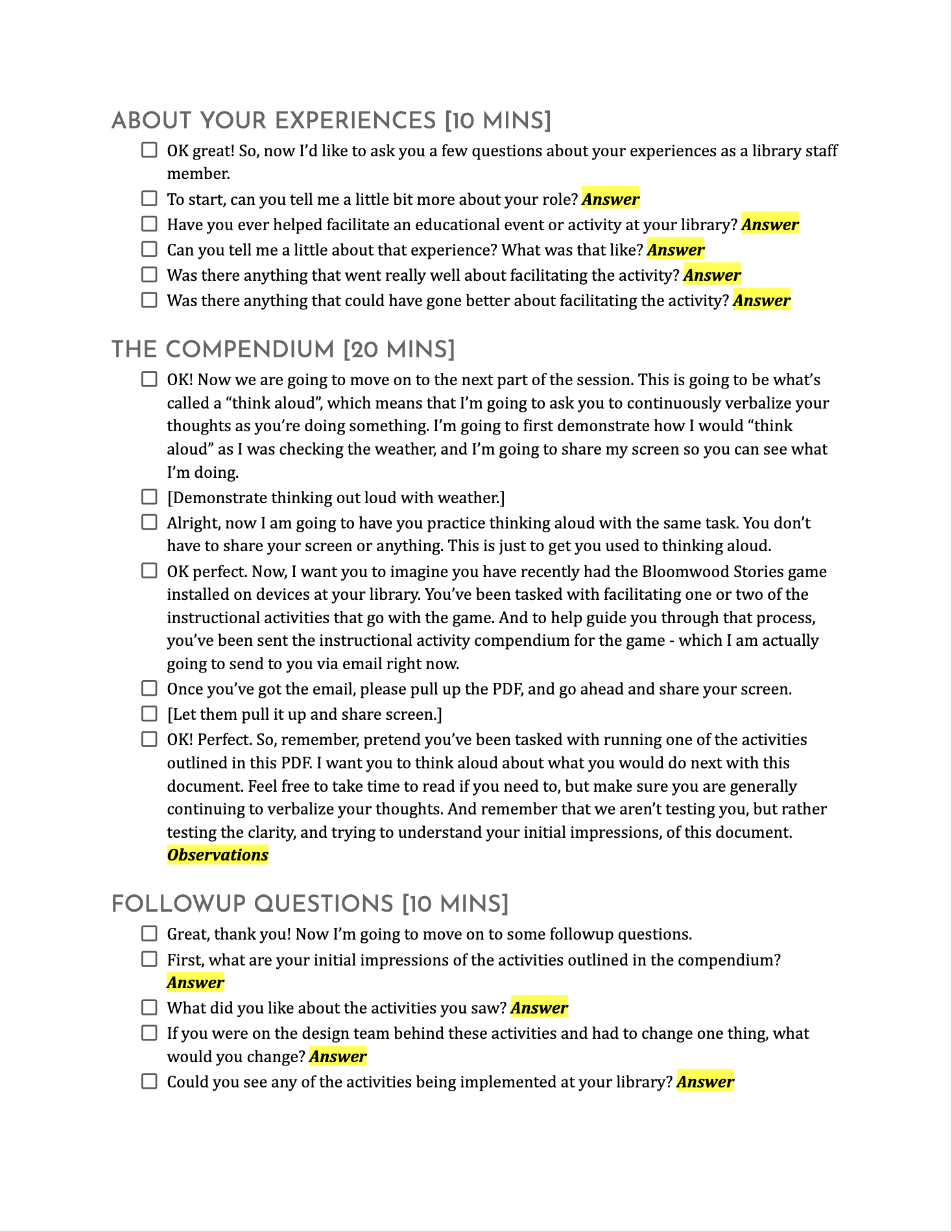
I ran think-alouds with library staff to validate and iterate on the compendium design. A portion of the protocol for these think alouds is shown below. The sample size was small at just three participants, which limited the depth of conclusions I could draw.
In retrospect, our recruitment and screening process was the weakest part of this work. Our team used Craigslist because that recruitment method had worked well for playtesting the game itself. For this specific audience, recruiting directly through local libraries would have been more appropriate and likely yielded more participants and ones with directly relevant experience. It’s a lesson I’ve carried forward: recruitment channels need to match the population you’re trying to study, even when broader project infrastructure says otherwise.
Measuring Impact
Measuring dispositional change is methodologically tricky, and we couldn’t design a before-and-after test for this context. Players engaged with the game and activities on their own time, outside any controlled administration window.
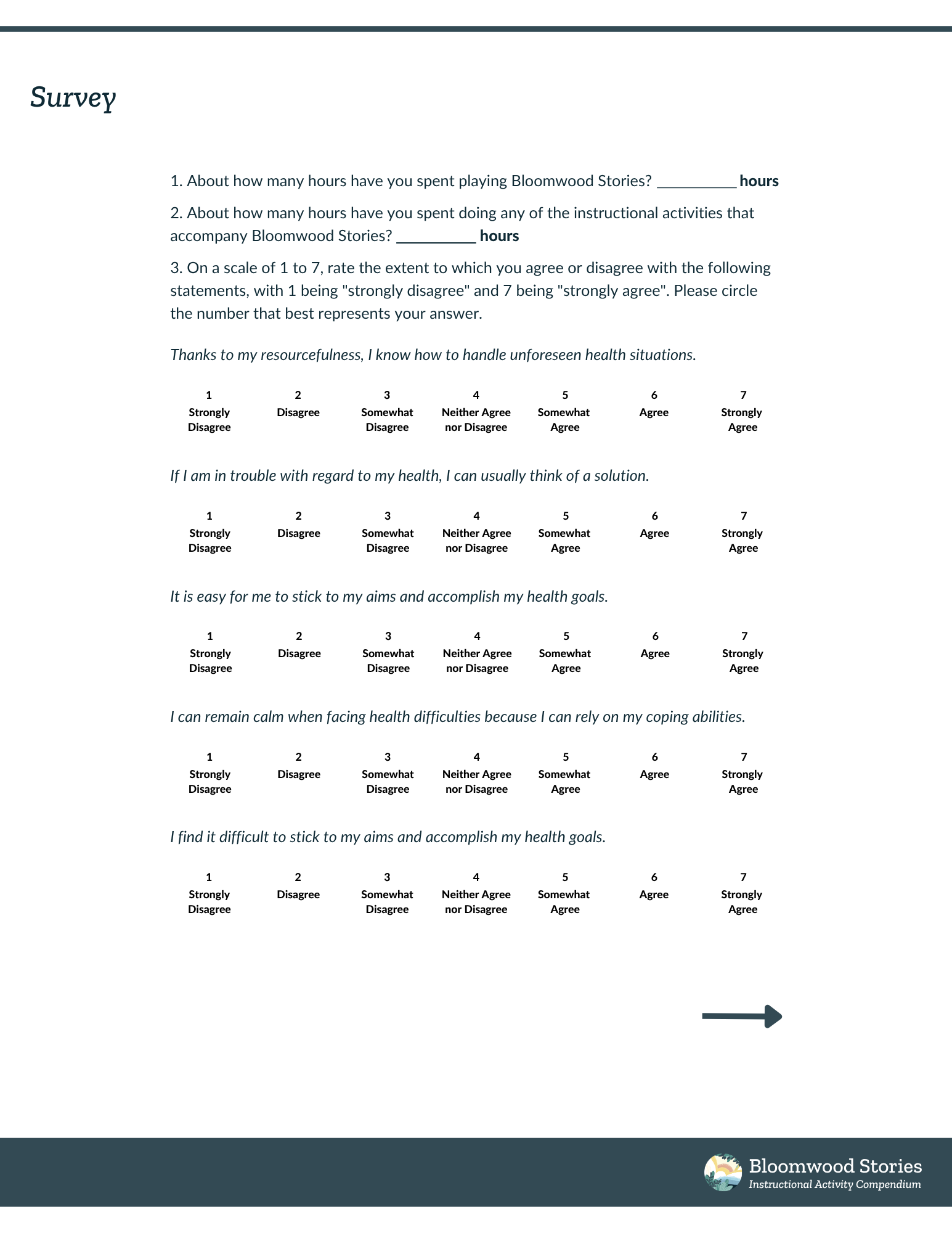
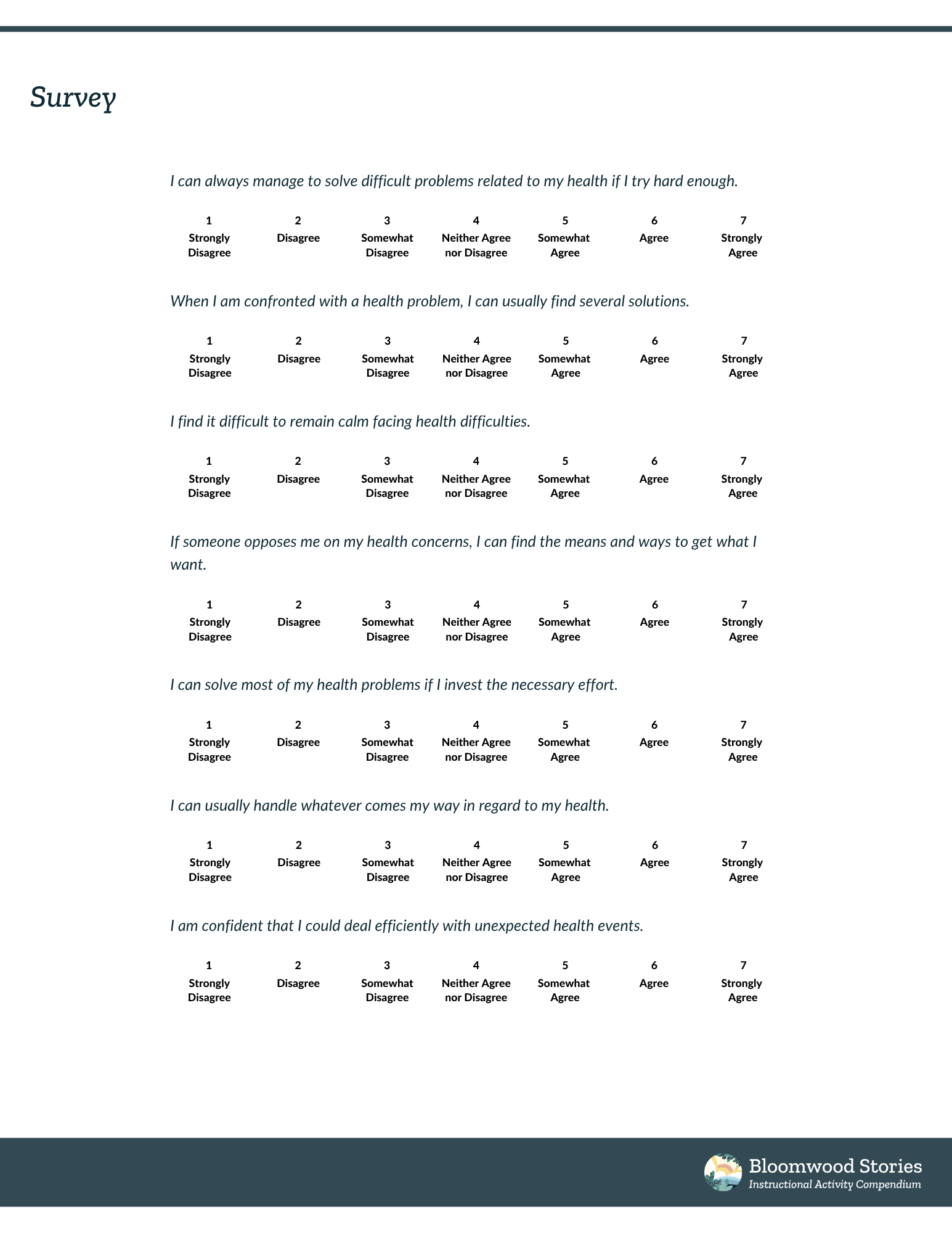
As a solution, I designed a survey where players self-report their time spent both with the game and the instructional activities, as illustrated below. Importantly, the survey was open to people who hadn’t engaged with the game or activities at all, providing a baseline against which to compare engaged respondents. This isn’t a perfect causal design, but it does provide a defensible way to examine differences in disposition between groups with varying levels of exposure.
Project Delivery
Bloomwood Stories: Block Party and the full instructional activity compendium were delivered to our library partners. The game is available to play here.